The lowest
cost game
system.
48 MHz of 32-bit RISC-V, 128×128 color screen, eight buttons, speaker and battery. Plug in USB-C and write a game.
Battery Included · No Soldering · No Drivers
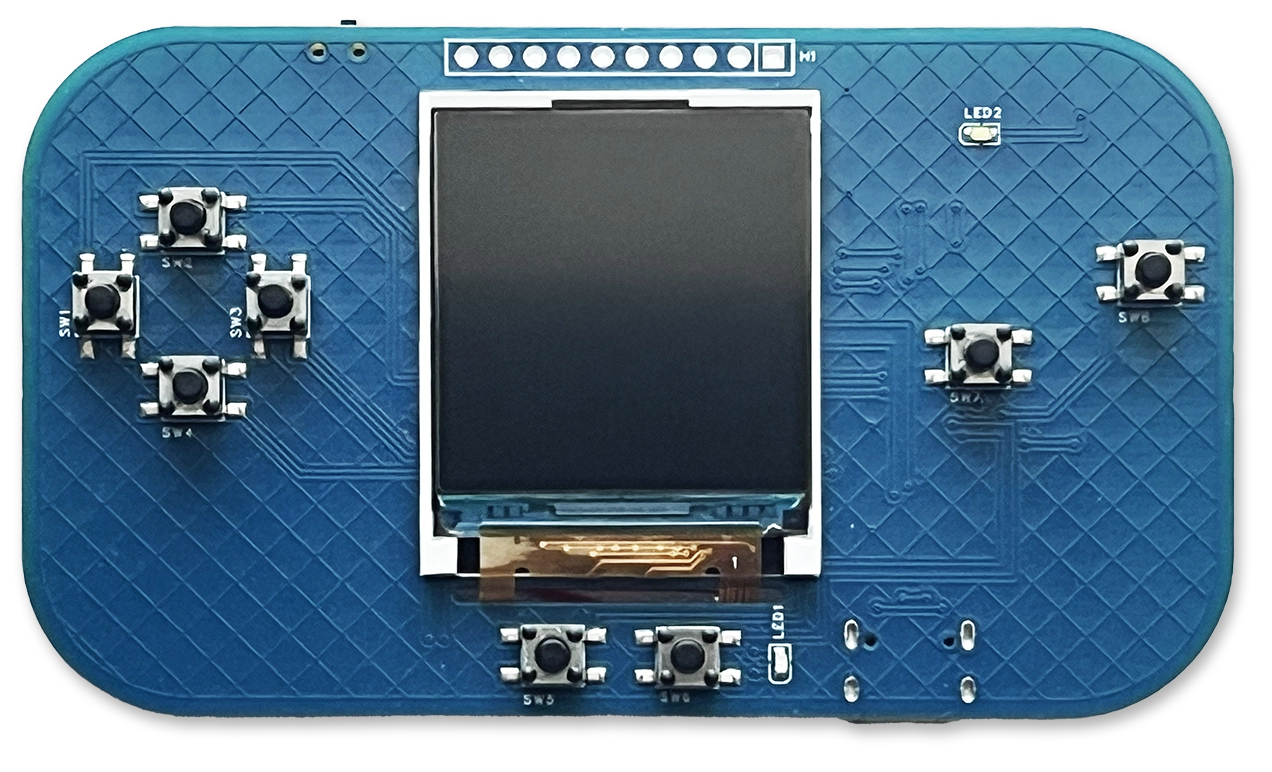
The board is the manual.
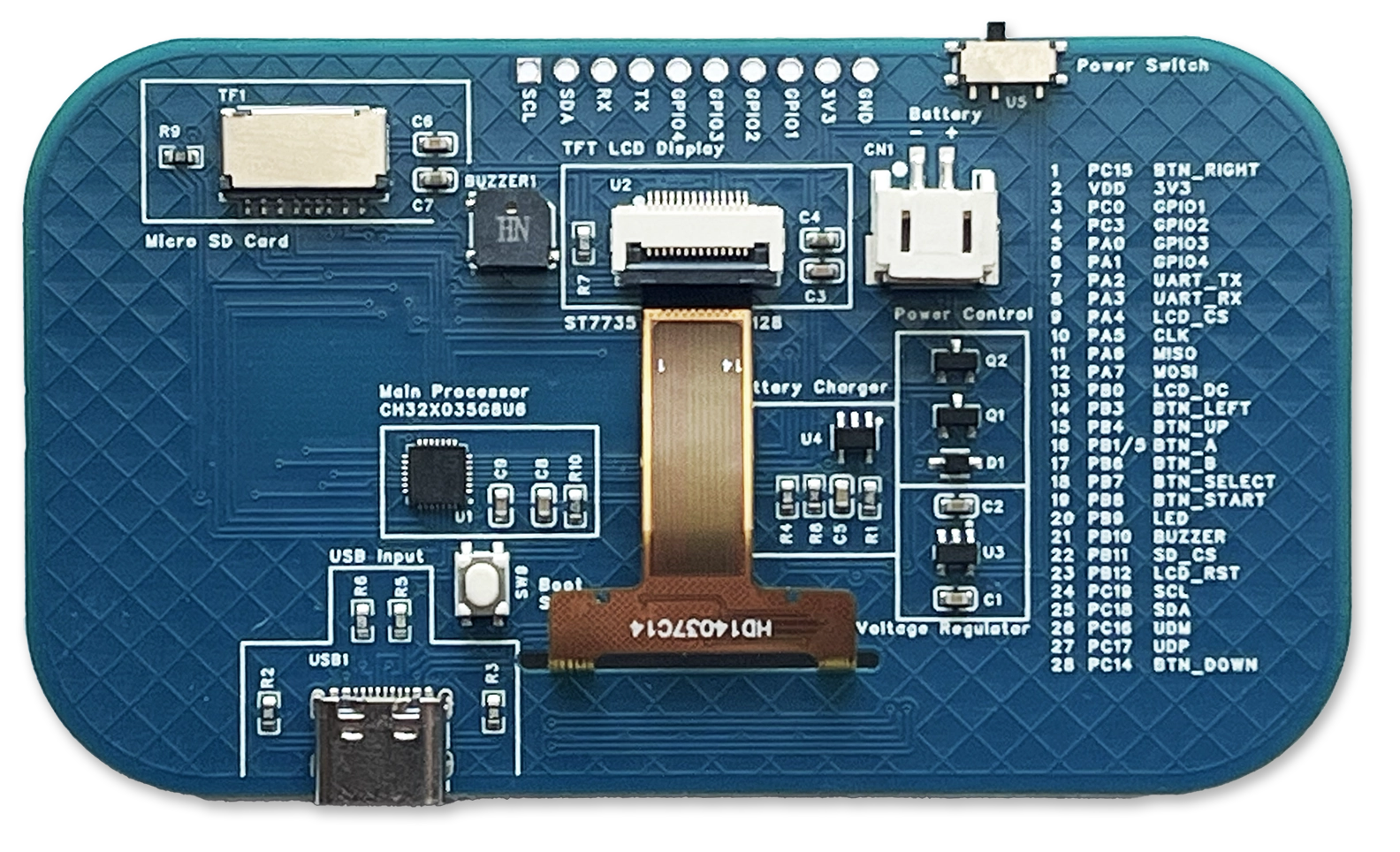
Hover or tap a dot to see what it does.
Small enough to
understand completely.
A modern console is a sealed box with a store attached. This one is 20 KB of RAM and a screen, and the entire mental model fits in your head.
Arduino, then upload
Install the CHGame plugin, pick the board, hit upload. The USB serial bootloader lives on the chip, so there's no programmer and no driver install. If you've ever blinked an LED, you're already set up.
60 fps out of 20 KB
CHGfx ships with it and holds 60 frames a second on a 128×128 color panel. Someone also got Doom running on this thing. Both of those sentences are true at the same time.
Constraints, on purpose
64 KB of flash forces you to choose, and that's the good part. It's why a weekend project actually ships, and why finishing one feels like something.
An SD card of everything
Drop games onto a microSD and browse them on the device. It'll show your GIFs too, which is a strange feature to be fond of, and yet.
Also just a dev board
GPIO, I²C and UART come out on the expansion port, with a user LED and a buzzer already wired. Plenty of people will buy this and never write a game with it.
Open, and cheap on purpose
Open-source platform, open community, $39 at Rev0 volumes. The price is set by the size of the run, not the bill of materials. Larger consecutive batches bring it down.
One box.
Nothing to solder.
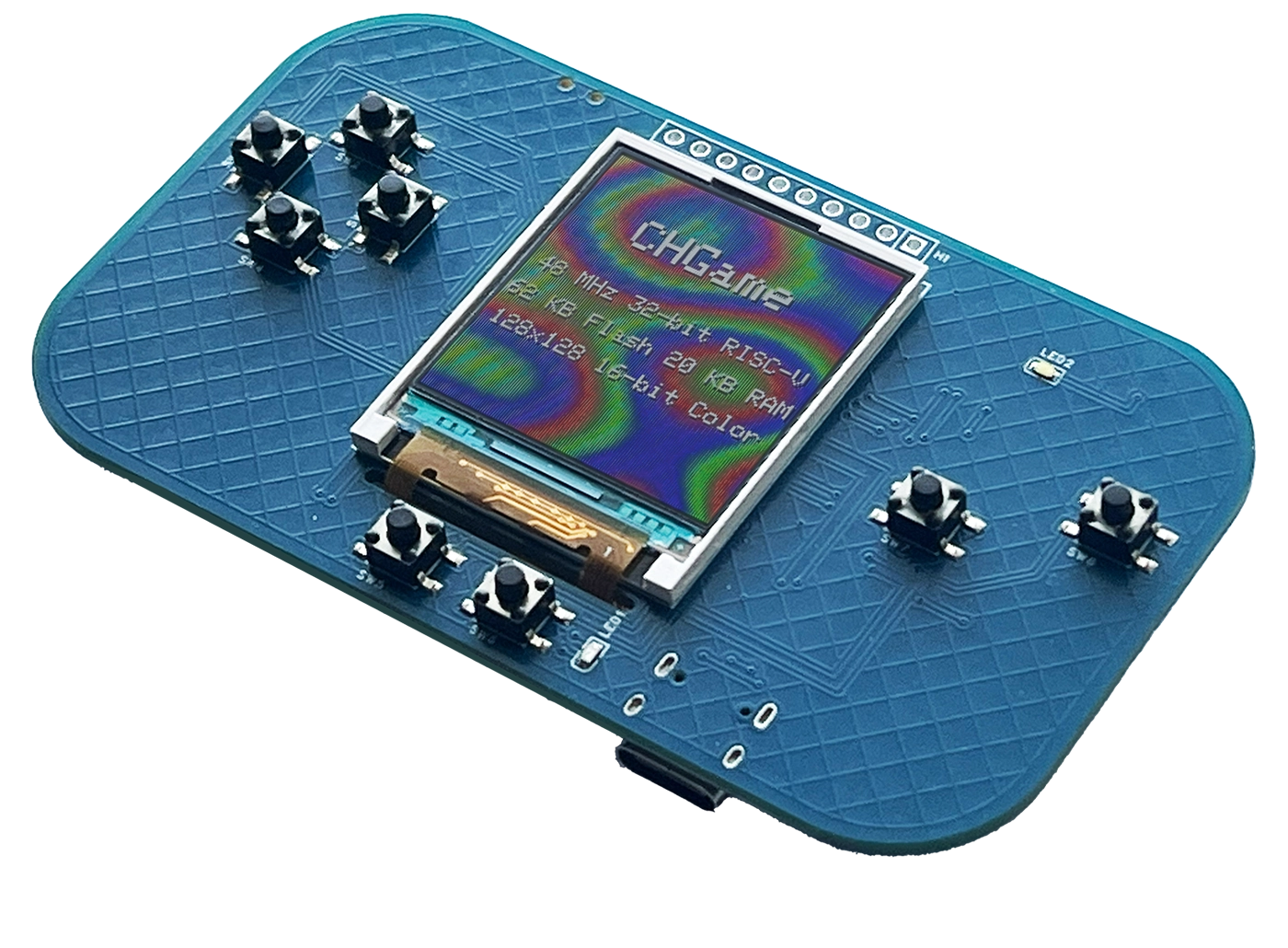
- The CHGame Rev0 board, assembled running a demo the second you power it up.
- A 200 mAh lithium-polymer battery, included, charged through the same USB-C port you code through.
- The 1.44″ 128×128 color LCD, already attached and driven over SPI.
- microSD slot, expansion port, speaker, LED all wired, all labelled, all waiting.
You bring a USB-C cable, plus a microSD card if you want the file browser.
Bare board,
on purpose.
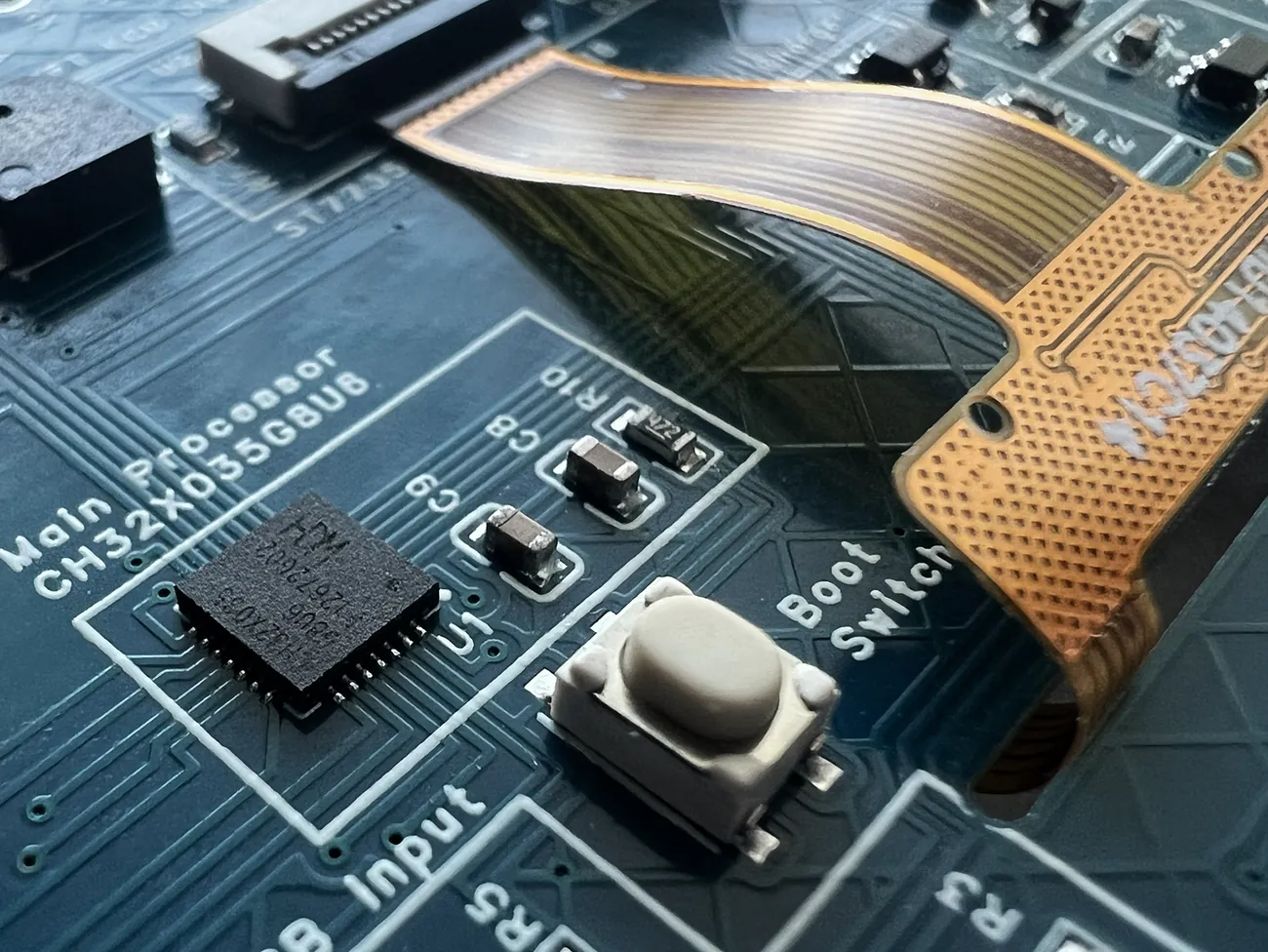
No case, no shrink wrap, no glued-shut mystery. The silkscreen names the main processor, the boot switch, the USB input and the passives around them. Because the first thing you should be able to do with a computer is see how it works.
These early units are priced to fund the platform. The parts are cheap; a small production run isn't. That changes with volume.